‏إظهار الرسائل ذات التسميات Review. إظهار كافة الرسائل

الاثنين، 5 نوفمبر 2018


نظرًا لأن مهارات Photoshop القياسية في الصناعة تعد ضرورة إذا كنت ترغب في أن تكون قابلاً للتطبيق في مجال تصميم الرسومات. وبسعر المئات من المراتب ومن خلال منحنى التعلم للتوافق ، فإنه لا يناسب الجميع ، ولكن الاستثمار يمكن أن يؤتي ثماره في زيادة الإنتاجية والمرونة القصوى. منذ الإصدار Creative Suite 3 ، يأتي Photoshop في إصدار قياسي بالإضافة إلى إصدار موسّع يحتوي على أدوات وميزات متخصصة للفيديو والهندسة والهندسة المعمارية والتصنيع والعلوم والمجالات الطبية.


من المهم ملاحظة أنه لا يمكنك الحصول على Photoshop CS6 مباشرةً من خلال Adobe ، ولكن يمكنك تنزيل أحدث إصدار من Photoshop عبر Creative Cloud أو طلبه من مواقع جهات خارجية مثل Amazon.

الايجابيات
معيار الصناعة لتحرير الصور الاحترافي ، والتصميم الجرافيكي ، والتصوير الرقمي.
يوفر المرونة القصوى والمزيد من أدوات التحرير وتوفير الوقت غير المدمرة مع كل تحديث.
يتضمن Photoshop CS6 مظهرًا جديدًا وميزات جديدة مفيدة والعديد من التحسينات المستوحاة من المستخدم.
يعمل Adobe Mercury Graphics Engine على تحسين السرعة والأداء في العديد من أدوات الرسومات المكثفة.
ﺧﻠﻔﻴﺔ ﺟﺪﻳﺪة ﺳﺘﺆدي ﺧﺼﺎﺋﺺ اﻟﺤﻔ Background واﻻﺳﺘﻌﺎدة اﻟﺘﻠﻘﺎﺋﻴﺔ إﻟﻰ ﻣﻨﻊ ﻓﻘﺪان اﻟﺒﻴﺎﻧﺎت اﻟﻜﺎرﺛﻲ واﻟﻮﻗﺖ اﻟﻀﺎﺋﻊ.

سلبيات
منحنى التعلم حاد.
قد يكون السعر باهظة بالنسبة للبعض.
يجب على المشترين الاختيار بين التنازل عن الميزات أو دفع المزيد مقابل الإصدار الموسع المكلفة.
مطلوب بطاقة رسومات سريعة للحصول على مزايا الأداء من Photoshop CS4 والإصدارات الأحدث.
يحدد Photoshop CS6 نهاية دعم أنظمة Macintosh ذات 32 بت.
مواصفات Photoshop CS6
معيار الصناعة لتحرير الصور الاحترافي ، والتصميم الجرافيكي ، والتصوير الرقمي.
قم بمعاينة ملفات الصور وتنظيمها والبحث عنها وإدارتها باستخدام Adobe File File Browser.
يجمع بين الأدوات للرسم ، والرسم ، والتنميق ، وإضافة الملاحظات ، والعمل مع النوع.
قم بتحرير الصور بشكل غير تدميري باستخدام أنماط الطبقة وطبقات الضبط والأقنعة والكائنات الذكية والفلاتر الذكية والسجل.
أتمتة المهام وتسريع الإنتاج باستخدام الإجراءات ومعالجة الدُفعة وتتبع المحفوظات والبرامج النصية.
يوفر Adobe Camera Raw معالجة مسبقة غير مدمرة لملفات Raw من معظم الكاميرات الرقمية ، بالإضافة إلى ملفات JPEG و TIFF.
يتضمن أدوات قوية لتصميم الجرافيك ، وتصميم مواقع الإنترنت ، وإنتاج الفيديو ، والتصوير الفوتوغرافي.
يوفر الإصدار الموسع التحرير ثلاثي الأبعاد وأدوات متقدمة للفيلم والتلفزيون والطب والعلوم والهندسة والهندسة المعمارية ومجالات التصنيع.
يضيف Photoshop CS6 ميزات مبتكرة وتحسينات صغيرة ستفيد العديد من أنواع المستخدمين. تم تنظيف جزء كبير من واجهة المستخدم وتسريجه وتحديثه.

يعمل ضمن نظام التشغيل Mac OS X 10.6.8 أو 10.7 أو Windows XP SP3 أو Windows 7 SP1. يتطلب ما لا يقل عن 1 غيغابايت من ذاكرة الوصول العشوائي وأجهزة الرسومات قادرة على OpenGL 2.0. مطلوب اتصال بالإنترنت و AdobeID للتفعيل.
ما الذي يجعل Adobe Photoshop CS6 برنامجًا رائعًا
للحصول على أقصى قدر من القوة والمرونة في الرسومات ، لا يمكن أن يتعرض Photoshop للضرب. يقدم Photoshop طرق عمل غير مدمرة أكثر من أي محرر صور آخر ، وتقوم Adobe دائمًا بإضافة تحسينات للمساعدة في إنجاز المهمة بشكل أسرع وبدرجة أقل من الإحباط.

يقدم Photoshop CS6 ميزات مثيرة ومبتكرة من الإصدارات السابقة التي ستجذب جميع أنواع المستخدمين ، بالإضافة إلى المظهر العصري وتحسينات الأداء الرائعة التي تعود بالنفع على الجميع. لا تدع ملاحظات "المظهر الجديد" تخيفك ، على الرغم من أن Photoshop كان في حاجة ماسة لتغيير واجهة المستخدم ، وستظل قادرًا على التنقل والبحث عن الأدوات التي تحتاجها.

يأتي الانفجار الأعظم لجهودكم في هذه الترقية من خلال العديد من التحسينات في السرعة والابتكارات الموفرة للوقت. إن حفظ الخلفية والاستعادة التلقائية ، على سبيل المثال ، هي ميزات مفيدة لن تذهلك مع حلوى العين ، ولكنها بالتأكيد ستكون موضع تقدير في المرة التالية التي تعطل فيها الكمبيوتر أو تفقد الطاقة. تعتبر عناصر التحكم التفاعلية على الشاشة في فلاتر التمويه ممتعة الاستخدام وتتيح لك إجراء تعديلات مباشرة في مساحة العمل والاطلاع على النتائج في سياق بدلاً من الاضطرار إلى تحريك المنزلقات حول وتخمين قيم التعديل الرقمي.

دعونا نكون صادقين - لا أحد يتحمس حقا حول الصور المحصورة ، لكنه شيء معظمنا يفعل الكثير من. حسنًا ، تم إعادة تصميم أداة الاقتصاص بطريقة أسهل لتصويب الصور وخيار غير مدمر سيبقي وحدات البكسل المقطوعة في حالة تغيير رأيك لاحقًا حول كيفية اقتصاص الصورة.

وإذا وجدت أدوات التصحيح التلقائي في Photoshop أقل من رائعة ، فقد تمت إعادة تصميمها جميعًا بحيث يتم تطبيق التصحيحات خصيصًا لكل صورة استنادًا إلى تحليل بيانات الصورة. وبعبارة أخرى ، فإنهم يعملون بشكل جيد الآن! يتضمن ذلك الأدوات التلقائية بنقرة واحدة الصحيحة في قائمة الصورة ، بالإضافة إلى الأزرار "تلقائي" في أدوات تعديل الطبقة مثل المستويات والمنحنيات والسطوع / التباين.

لا تعمل الأدوات الجديدة والحالية مثل التصحيح المدرك للمحتوى ، والتحديدات القائمة على لون البشرة ، والتفاف العرائس ، وتحسينات التحديد ، دائمًا على أنها "سحرية" كما تريد Adobe أن تصدقها ، ولكنها ستوفر عليك الكثير من الوقت وتوضح كيفية عمل Photoshop حافة على المنتجات المنافسة.

تم نقل تعديل الفيديو ، الذي كان في السابق ميزة فقط في إصدار Photoshop Extended ، إلى الإصدار القياسي ، لذا يمكن الآن استخدام Photoshop لتحرير كل تلك المقاطع من هاتفك الذكي أو نقطة وكاميرا التصوير. يمكنك إنشاء عروض الشرائح والأفلام مع التحولات من مجموعة من مقاطع الفيديو والمسارات الصوتية والصور الثابتة. يمكن معالجة الفيديو بالعديد من نفس الأدوات التي تستخدمها مع الصور الثابتة ، ويمكن تصدير الفيديو بتنسيقات شائعة مع إعدادات مسبقة لمختلف المواقف والأجهزة.
الكل في الكل ، فوتوشوب CS6 هو بالتأكيد ترقية جديرة بالاهتمام من أي إصدار سابق ، ولكن لا سيما تلك التي لا تزال تعمل CS4 وأقل. صحيح أن Photoshop باهظ الثمن ، ولكن الاستثمار يحقق أرباحًا في زيادة الإنتاجية وأقصى قدر من المرونة. مجموعة متنوعة من خيارات الشراء في Photoshop (بما في ذلك الأجنحة المعبأة ، والاكتتاب المستقل ، والاشتراك ، و Creative Cloud ، وتسعير الطالب / المعلم) ، تجعله أكثر سهولة للوصول إلى عدد أكبر من الأشخاص.

لتحميل البرنامج : اضغط هنا 

إفشاء:

تم توفير نسخة مراجعة من قبل الناشر. لمزيد من المعلومات ، يرجى الاطلاع على سياسة الأخلاقيات الخاصة بنا.

الأربعاء، 18 يوليو 2018


What is a hands on review?

TODO alt text


OUR EARLY VERDICT

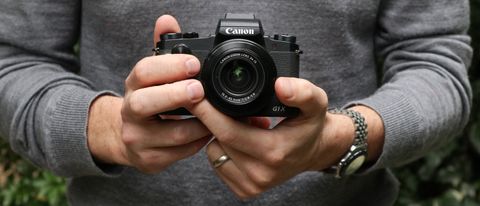
The PowerShot G1 X Mark III is the first APS-C format compact camera to feature a zoom lens, making it something quite unique. It's pricey, but Canon may just have hit the sweet spot for the enthusiast photographer.

FOR

  • APS-C sensor in a small body
  • Built-in EVF
  • Refined touchscreen interface
  • Compact size

AGAINST

  • Limited zoom range
  • Battery life restrictive
  • Only 1080p video capture

Canon PowerShot G1 X Mark III deals

No price information
The Canon PowerShot G1 X Mark III is the latest in a long line of enthusiast-focused compact cameras, designed for photographers looking for something to complement their DSLR, or for those looking for a versatile alternative to a DSLR in a relatively compact body. 
The original PowerShot G1 was launched in 2000, and for a while that camera and its successors were the obvious choice when it came to choosing an enthusiast compact.
But with rivals like the RX100 series from Sony, the LX range from Panasonic and Fujifilm's X100 line, Canon's flagship PowerShot compact has struggled to stand out from the crowd in recent years. And it would be fair to say that the outgoing G1 X Mark II, with its unique 1.5-inch sensor, missed the mark, so Canon is chucking everything at the G1 X Mark III.

Features

  • APS-C CMOS Sensor, 24.2MP
  • 3.0-inch vari-angle touchscreen, 1,040,000 dots
  • 1080p video capture
Where the G1 X Mark II used a 1.5-inch sensor, the G1 X Mark III uses a 24.2MP APS-C CMOS chip that's some 36% larger; it's nearly identical to the one in Canon's EOS 80D DSLR, delivering an ISO range from 100 to 25,600.
This is hooked up to Canon's latest DIGIC 7 image processor, allowing the PowerShot G1 X Mark III to not only handle data that much quicker than the older model, but promising to reduce the need to edit images thanks to an Auto Lighting Optimizer and Diffraction Correction.
The G1 X Mark III sports a slightly more modest zoom range than the older model, at 24-72mm compared to 24-120mm, and has a f/2.8-5.6 aperture range. It also offers a close-focusing distance of just 10cm, while the lens features a nine-bladed aperture, which Canon says will produce pleasing background blur.
To minimize blur caused by camera shake, the PowerShot G1 X Mark III features a dual-sensing image stabilization system that can compensate for movement by up to four stops.
There's also five-axis Advanced Dynamic IS for video recording. While we're touching on video, the PowerShot G1 X Mark III can shoot 1080p video at up to 60p – there's no 4K video capture here. 
mage 1 of 4
I
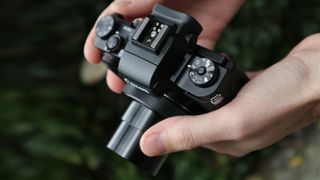
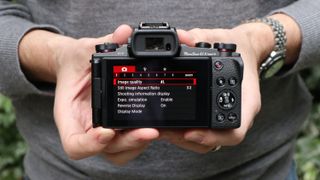
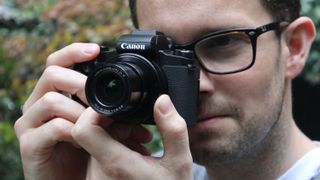
The PowerShot G1 X Mark III features a built-in EVF – something that was missing from the Mark II – with a 2.36 million dot 0.39x Organic EL display, while there's a 3.0-inch vari-angle touchscreen display with a resolution of 1.04 million dots, identical to those on the latest EOS DSLRs, such as the EOS Rebel T7i / 800D.
There's Wi-Fi, NFC and always-on Bluetooth connectivity to enable you to remotely transfer images from your camera to a compatible smart device. Canon's Camera Connect app also lets you wake the camera from its slumber (provided you haven't turned the camera fully off), as well as browse photos and operate the camera remotely. 

Build and handling

  • 14.8mm thinner and 16% smaller than G1 X Mark II
  • Similar weather protection to EOS 80D
  • Weighs 399g
The design of the Canon PowerShot G1 X Mark III is quite a shift from the Mark II, more closely resembling that of the PowerShot G5 X, and it's all the better for it.
The G1 X Mark II never felt that satisfying to hold, and felt unnecessarily cumbersome. The Mark III feels much better in the hand – despite squeezing in a larger sensor the camera is some 16% smaller and 14.8mm thinner, while the fit and finish are a noticeable improvement over the older model. The PowerShot G1 X Mark III is even dust- and drip-proof, with Canon stating that it offers similar weather sealing to the EOS 80D. 


The PowerShot G1 X Mark III is in actual fact only a bit bigger than the G5 X


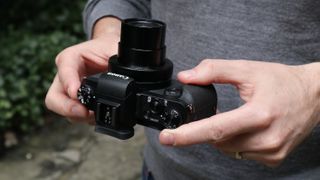
The PowerShot G1 X Mark III is in actual fact only a bit bigger than the G5 X, but despite its diminutive proportions it still provides a secure purchase thanks to the sculptured front grip and pronounced thumb rest. 
Controls are sensibly positioned, with the front command dial and top plate exposure compensation dial falling under the fingers nicely, while Canon has designed the shutter release to match those of high-end EOS cameras. There's now a single click-less control ring round the front of the lens as well, which can be assigned to functions such as manual focusing, or be used to zoom the lens, though we found rocker switch quicker to use for the latter. 

Autofocus

  • Dual Pixel CMOS AF
  • Touch-and-drag AF
  • 49 AF points on a 7 x 7 grid
Canon's Dual Pixel CMOS AF has impressed us for Live View photography on its latest range of EOS DSLRs, so it's no surprise to see it make an appearance in the PowerShot G1 X Mark III. 
Featuring 49 AF points arranged in a 7 x 7 grid, the system provides good coverage across the frame, although not quite edge to edge. Focusing is swift, with Canon stating 0.09 secs to acquire focus, while there's also the ability to touch and drag the AF area via the rear screen (even when using the EVF). 

Performance

  • 7fps burst shooting (9fps with focus lock)
  • Polished interface
  • 200-shot battery life
The Canon PowerShot G1 X Mark III can shoot at a pretty rapid 7fps, while if you need even more speed you have the option of shooting at 9fps, provided you're prepared to have focus locked at the first shot. 
Buffer performance is also pretty respectable, with the camera capable of capturing 24 JPEGs or 19 raw files before it slows up – that's nothing like the blistering performance of Sony's RX100 V, but it should satisfy most potential users. 
In the brief time we had with the PowerShot G1 X Mark III, our first impressions were very good. The viewfinder is nice and crisp, while the touchscreen interface has to be one of the best around – it's easy to use, and really responsive.
Battery life is pretty limited, however, at just 200 shots – you'll definitely want to consider additional batteries if you're going to be out for the day or weekend. 

Image quality

  • ISO100-25,600
  • Panoramic shot mode
  • +/-3 EV exposure compensation in 1/3 or 1/2-stop increments
We had a chance to shoot with the pre-production model, and while we'll have to wait until we get hold of our full review sample to report in greater deal, we were impressed here too.
With the G1 X Mark III using a sensor that's almost identical to the EOS 80D's, there are no nasty surprises when it comes to image quality. Detail rendition appears very good, while noise is also handled well.


Early verdict

The Canon PowerShot G1 X Mark III is certainly a big improvement over the undercooked G1 X Mark II. The fact that Canon has managed to engineer a camera this size with a large APS-C sensor is very impressive – and even more impressive is the fact that this is the first APS-C format compact camera to feature a zoom lens, making it something quite unique. 
The sticking point might be the $1,299/£1,149 asking price (Australian pricing is yet to be announced), especially when you compare this camera to DSLR or mirrorless rivals. However, if you're set on a premium all-in-one compact camera,the G1 X Mark III doesn't look that bad when you compare it to similarly priced rivals. The fabulous Fujifilm X100F costs more, but doesn't offer a zoom lens, while the slightly more affordable Sony RX100 V offers a longer zoom and snappier performance, but with a smaller 1-inch sensor. 
All things considered, Canon may have hit the sweet spot for enthusiast photographers with the PowerShot G1 X Mark III – we'll update this hands-on review with our full and final verdict once we've reviewed it in depth.

الخميس، 2 نوفمبر 2017

TODO alt text


OUR EARLY VERDICT

The PowerShot G1 X Mark III is the first APS-C format compact camera to feature a zoom lens, making it something quite unique. It's pricey, but Canon may just have hit the sweet spot for the enthusiast photographer.

FOR

  • APS-C sensor in a small body
  • Built-in EVF
  • Refined touchscreen interface
  • Compact size

AGAINST

  • Limited zoom range
  • Battery life restrictive
  • Only 1080p video capture

Canon PowerShot G1 X Mark III deals

No price information
The Canon PowerShot G1 X Mark III is the latest in a long line of enthusiast-focused compact cameras, designed for photographers looking for something to complement their DSLR, or for those looking for a versatile alternative to a DSLR in a relatively compact body. 
The original PowerShot G1 was launched in 2000, and for a while that camera and its successors were the obvious choice when it came to choosing an enthusiast compact.
But with rivals like the RX100 series from Sony, the LX range from Panasonic and Fujifilm's X100 line, Canon's flagship PowerShot compact has struggled to stand out from the crowd in recent years. And it would be fair to say that the outgoing G1 X Mark II, with its unique 1.5-inch sensor, missed the mark, so Canon is chucking everything at the G1 X Mark III.

Features

  • APS-C CMOS Sensor, 24.2MP
  • 3.0-inch vari-angle touchscreen, 1,040,000 dots
  • 1080p video capture
Where the G1 X Mark II used a 1.5-inch sensor, the G1 X Mark III uses a 24.2MP APS-C CMOS chip that's some 36% larger; it's nearly identical to the one in Canon's EOS 80D DSLR, delivering an ISO range from 100 to 25,600.
This is hooked up to Canon's latest DIGIC 7 image processor, allowing the PowerShot G1 X Mark III to not only handle data that much quicker than the older model, but promising to reduce the need to edit images thanks to an Auto Lighting Optimizer and Diffraction Correction.
The G1 X Mark III sports a slightly more modest zoom range than the older model, at 24-72mm compared to 24-120mm, and has a f/2.8-5.6 aperture range. It also offers a close-focusing distance of just 10cm, while the lens features a nine-bladed aperture, which Canon says will produce pleasing background blur.
To minimize blur caused by camera shake, the PowerShot G1 X Mark III features a dual-sensing image stabilization system that can compensate for movement by up to four stops.
There's also five-axis Advanced Dynamic IS for video recording. While we're touching on video, the PowerShot G1 X Mark III can shoot 1080p video at up to 60p – there's no 4K video capture here. 
Image 1 of 4
The PowerShot G1 X Mark III features a built-in EVF – something that was missing from the Mark II – with a 2.36 million dot 0.39x Organic EL display, while there's a 3.0-inch vari-angle touchscreen display with a resolution of 1.04 million dots, identical to those on the latest EOS DSLRs, such as the EOS Rebel T7i / 800D.
There's Wi-Fi, NFC and always-on Bluetooth connectivity to enable you to remotely transfer images from your camera to a compatible smart device. Canon's Camera Connect app also lets you wake the camera from its slumber (provided you haven't turned the camera fully off), as well as browse photos and operate the camera remotely. 

Build and handling

  • 14.8mm thinner and 16% smaller than G1 X Mark II
  • Similar weather protection to EOS 80D
  • Weighs 399g
The design of the Canon PowerShot G1 X Mark III is quite a shift from the Mark II, more closely resembling that of the PowerShot G5 X, and it's all the better for it.
The G1 X Mark II never felt that satisfying to hold, and felt unnecessarily cumbersome. The Mark III feels much better in the hand – despite squeezing in a larger sensor the camera is some 16% smaller and 14.8mm thinner, while the fit and finish are a noticeable improvement over the older model. The PowerShot G1 X Mark III is even dust- and drip-proof, with Canon stating that it offers similar weather sealing to the EOS 80D. 


The PowerShot G1 X Mark III is in actual fact only a bit bigger than the G5 X


The PowerShot G1 X Mark III is in actual fact only a bit bigger than the G5 X, but despite its diminutive proportions it still provides a secure purchase thanks to the sculptured front grip and pronounced thumb rest. 
Controls are sensibly positioned, with the front command dial and top plate exposure compensation dial falling under the fingers nicely, while Canon has designed the shutter release to match those of high-end EOS cameras. There's now a single click-less control ring round the front of the lens as well, which can be assigned to functions such as manual focusing, or be used to zoom the lens, though we found rocker switch quicker to use for the latter. 

Autofocus

  • Dual Pixel CMOS AF
  • Touch-and-drag AF
  • 49 AF points on a 7 x 7 grid
Canon's Dual Pixel CMOS AF has impressed us for Live View photography on its latest range of EOS DSLRs, so it's no surprise to see it make an appearance in the PowerShot G1 X Mark III. 
Featuring 49 AF points arranged in a 7 x 7 grid, the system provides good coverage across the frame, although not quite edge to edge. Focusing is swift, with Canon stating 0.09 secs to acquire focus, while there's also the ability to touch and drag the AF area via the rear screen (even when using the EVF). 

Performance

  • 7fps burst shooting (9fps with focus lock)
  • Polished interface
  • 200-shot battery life
The Canon PowerShot G1 X Mark III can shoot at a pretty rapid 7fps, while if you need even more speed you have the option of shooting at 9fps, provided you're prepared to have focus locked at the first shot. 
Buffer performance is also pretty respectable, with the camera capable of capturing 24 JPEGs or 19 raw files before it slows up – that's nothing like the blistering performance of Sony's RX100 V, but it should satisfy most potential users. 
In the brief time we had with the PowerShot G1 X Mark III, our first impressions were very good. The viewfinder is nice and crisp, while the touchscreen interface has to be one of the best around – it's easy to use, and really responsive.
Battery life is pretty limited, however, at just 200 shots – you'll definitely want to consider additional batteries if you're going to be out for the day or weekend. 

Image quality

  • ISO100-25,600
  • Panoramic shot mode
  • +/-3 EV exposure compensation in 1/3 or 1/2-stop increments
We had a chance to shoot with the pre-production model, and while we'll have to wait until we get hold of our full review sample to report in greater deal, we were impressed here too.
With the G1 X Mark III using a sensor that's almost identical to the EOS 80D's, there are no nasty surprises when it comes to image quality. Detail rendition appears very good, while noise is also handled well.


Straight out of camera JPEG file at ISO5000

Early verdict

The Canon PowerShot G1 X Mark III is certainly a big improvement over the undercooked G1 X Mark II. The fact that Canon has managed to engineer a camera this size with a large APS-C sensor is very impressive – and even more impressive is the fact that this is the first APS-C format compact camera to feature a zoom lens, making it something quite unique. 
The sticking point might be the $1,299/£1,149 asking price (Australian pricing is yet to be announced), especially when you compare this camera to DSLR or mirrorless rivals. However, if you're set on a premium all-in-one compact camera,the G1 X Mark III doesn't look that bad when you compare it to similarly priced rivals. The fabulous Fujifilm X100F costs more, but doesn't offer a zoom lens, while the slightly more affordable Sony RX100 V offers a longer zoom and snappier performance, but with a smaller 1-inch sensor. 
All things considered, Canon may have hit the sweet spot for enthusiast photographers with the PowerShot G1 X Mark III – we'll update this hands-on review with our full and final verdict once we've reviewed it in depth.